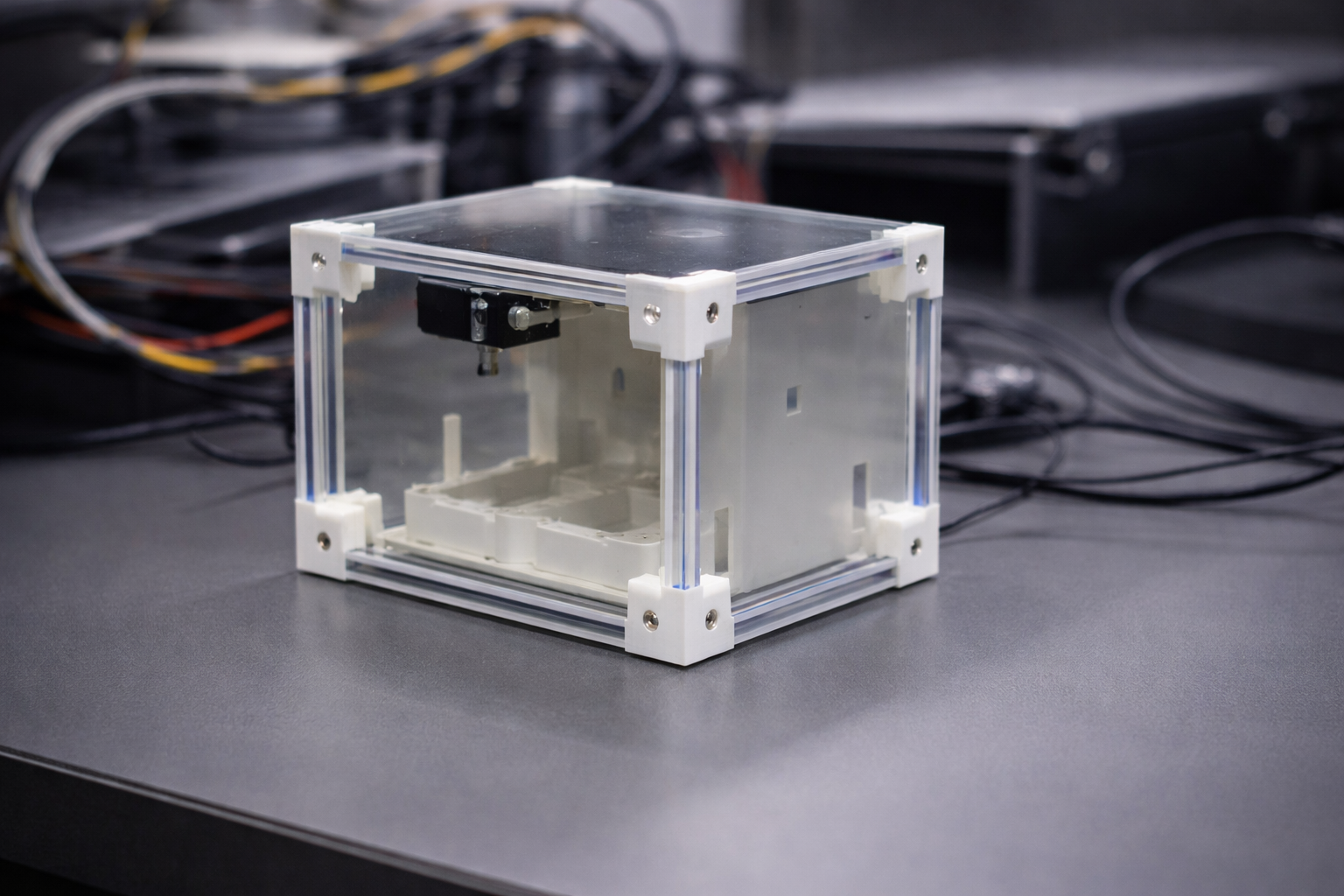
Printed enclosure shell
Acrylic top, bottom, and side panels bonded into printed corner structures for a clean, rigid enclosure.
After six Moon missions, we still do not have a clean direct gravity measurement off Earth.
We’re building the gravity experiment they should have built.
The lunar gravimeter drifted, could not be properly zeroed, and never delivered the clean off-Earth gravity result people expected.
That leaves a gap no one should be comfortable with: humanity has stood on the Moon, but has never completed a proper direct gravity experiment there.
Echo Shear Labs is building a torsion beam balance to measure the mutual attraction between two masses directly on lunar regolith.
A torsion balance suspends a light beam on an extremely fine fibre. When one mass pulls on another, the beam twists by a tiny angle. That twist is small, but with the right optics it becomes measurable.
A narrow beam carries two test masses and hangs from a very fine suspension fibre that resists twisting.
A nearby source mass pulls slightly harder on one side than the other, producing a tiny torque on the beam.
A laser and optical readout turn that almost invisible rotation into a measurable signal.
The entire measurement lives in that tiny twist. The job of the rest of the system is to make the twist stable, visible, and clean enough to trust.
These are the current build visuals: enclosure, torsion beam, optics integration, and the vacuum test configuration. Each one turns the project from an argument into hardware. For more information, contact contact@echoshearlabs.com.
Acrylic top, bottom, and side panels bonded into printed corner structures for a clean, rigid enclosure.
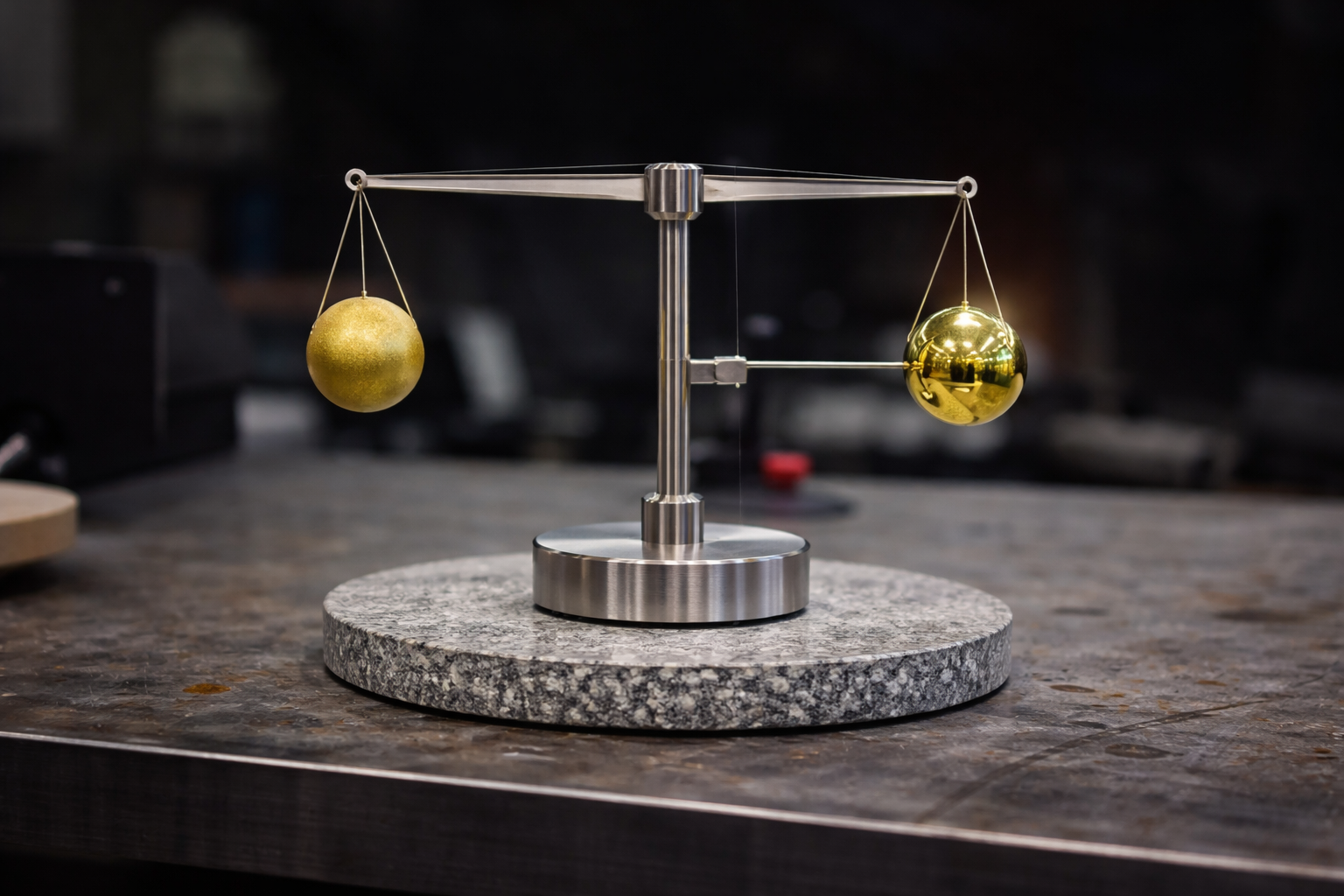
The core balance geometry: suspended beam, precision support, and paired masses ready for measurement work.
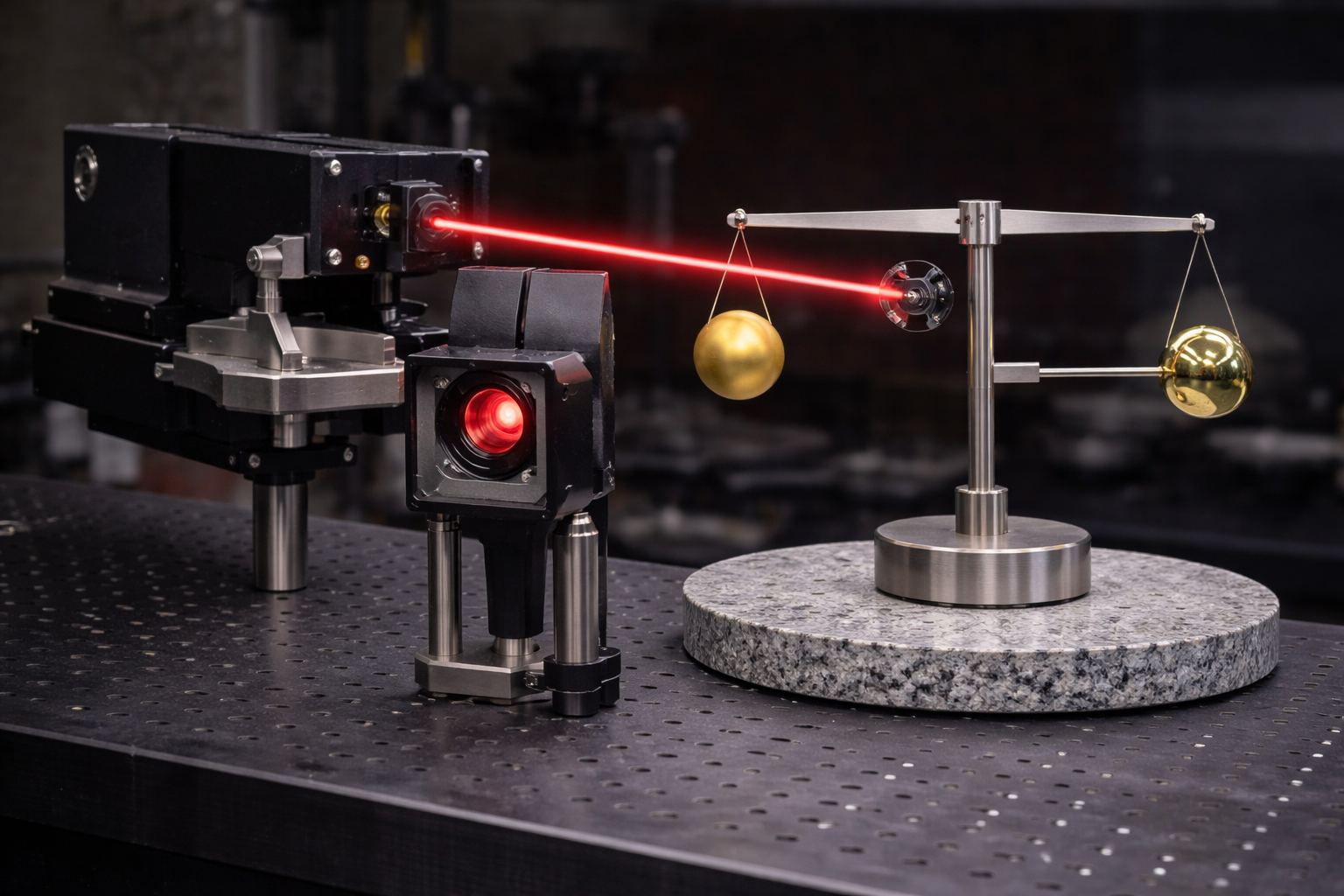
Precision laser optics tied into the torsion balance so tiny motion can actually be seen and recorded.
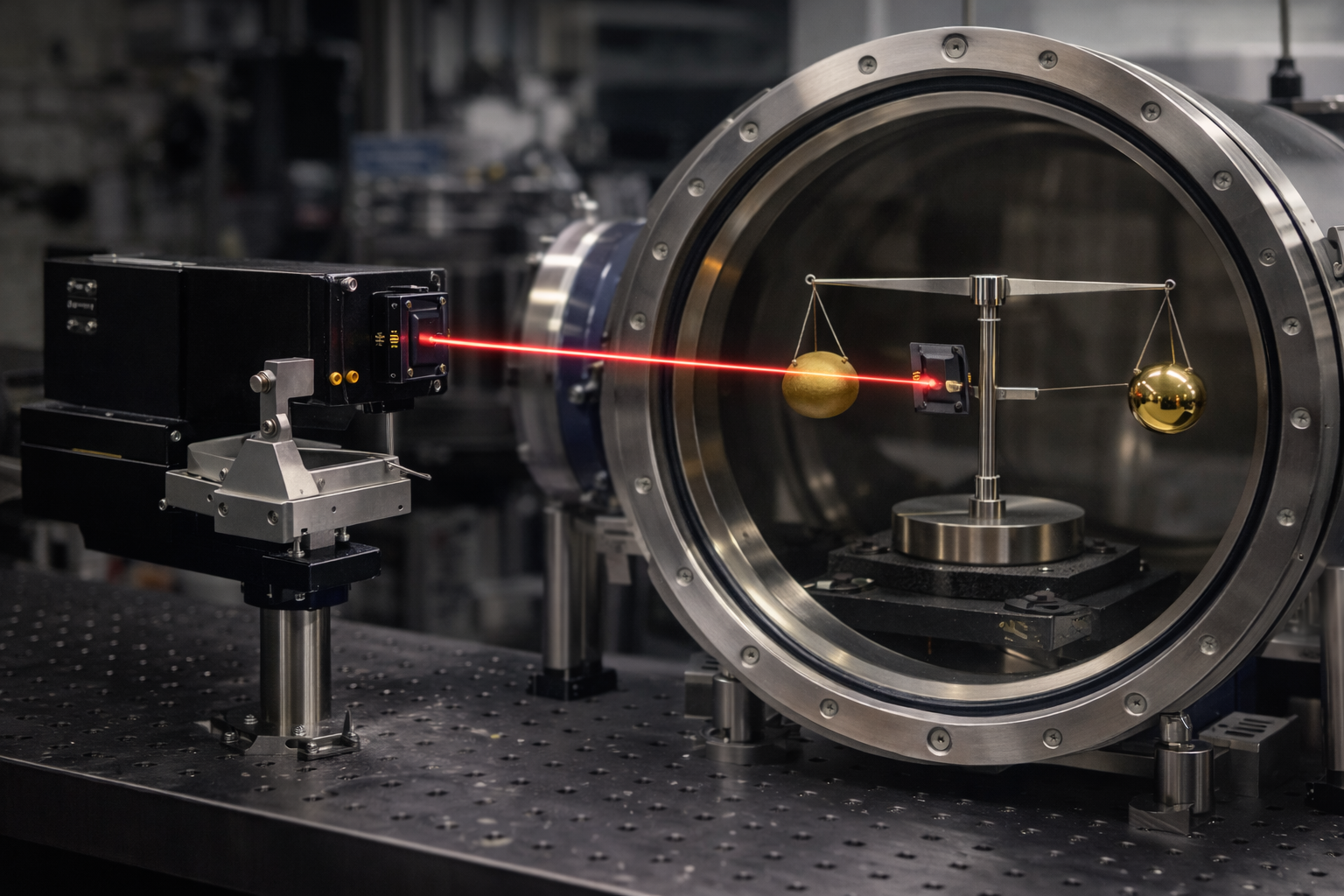
The vacuum configuration: torsion balance inside chamber, optics outside, measurement path locked through the viewport.
Want more detail, media, collaboration info, or technical discussion? Contact contact@echoshearlabs.com.
We’ve opened two dedicated GoFundMe campaigns so supporters in the UK and Canada can easily donate in their own currency.
Every contribution goes directly into building and testing the torsion beam apparatus.